
Showing posts with label hewehi. Show all posts
Showing posts with label hewehi. Show all posts
Friday, January 30, 2009

Saturday, January 17, 2009
Wall Street rebounds

Wall Street has managed its second straight comeback, but the rebound was more a sign of the market's turmoil than strength.
Stocks closed moderately higher Friday after an erratic session that had investors tussling with concerns about the ongoing problems in the banking industry in response to more billion-dollar losses at Citigroup Inc. and Bank of America Corp. Yet investors were also heartened by plans for both banks to restore themselves to profitability, and they were also willing to place bets on a range of consumer and industrial stocks.
It's that tug of war between problems and promise," said Alan Gayle, senior investment strategist at RidgeWorth Investments. "I think there is a bit of a sigh of relief that there is assistance coming for Citi and Bank of America, but it seems like there is an ongoing need for this assistance."
The companies' fourth-quarter losses -- Citi said it lost $8.29 billion, while Bank of America lost $2.39 billion -- were sobering reminders that the sagging economy is aggravating the problems that began with the mortgage crisis in 2007.
Still, the market drew some reassurance from the fact that Bank of America reached a deal late Thursday to receive an additional $20 billion in capital from the government. The bank will also receive guarantees to cover up to $118 billion in losses on loans and securities backed by residential and commercial real estate as it incorporates recently acquired Merrill Lynch & Co. into its operations. Bank of America's deal with the government is similar to one Citigroup reached with the government last fall.
Meanwhile, Citigroup, among the hardest hit by the ongoing credit and mortgage market turmoil, said it plans to separate its traditional banking business from its riskier operations. Earlier in the week, Citi agreed to sell a majority stake in its brokerage business to Morgan Stanley as it looks to streamline and shed assets.
Amid the uncertainty about financials, investors were buying consumer stocks like Wal-Mart Stores Inc., McDonald's Corp. and Procter & Gamble Co. Some tech stocks were among the gainers, including Intel Inc. and Microsoft Corp. After two weeks of selling, many stocks are looking much more attractive.
The Dow Jones industrial average rose 68.73, or 0.84 percent, to 8,281.22. The Dow was down 103 points in early afternoon. On Thursday, it recovered from a 205-point loss to close up 12.35; before its rebound, the Dow fell below 8,000 for the first time since Nov. 21.
The Standard & Poor's 500 index rose 6.38, or 0.76 percent, to 850.12, while the Nasdaq composite index rose 17.49, or 1.16 percent, to 1,529.33.
The indexes were down for the week, the result of selling in response to weak economic data and fears that fourth-quarter earnings reports, which begin next week in earnest, will point to a prolonged recession.
For the week, the Dow fell 3.7 percent, the S&P 500 lost 4.5 percent and the Nasdaq skidded 2.7 percent.
"We continue to see a tug of war between what has been some really bad economic data in recent weeks and optimism that the economy and financial markets are likely to stabilize and improve as we head through 2009," said Michael Sheldon, chief market strategist at RDM Financial. "There clearly are a lot of crosscurrents in the market."
Alexander Paris, economist and market analyst for Chicago-based Barrington Research, said the price swings seen in the past few days are likely to continue until all the earnings data is in.
"We're going into a test of the market, given the bad numbers coming out," Paris said. "It's a battle between sentiment and ugly fundamentals."
John Merrill, chief investment officer of Tanglewood Wealth Management, said the market will be eyeing results outside the financial industry to see if banking troubles are seeping further into the broader economy. If non-financials can show some growth, it could restart the late 2008 rally that stalled in the first week of January.
"There's no sustained buying," Merrill said. "The follow through just isn't there."
Some of Friday's price movements were exacerbated by the expiration of stock options.
Bank of America shares tumbled $1.14, or 13.7 percent, to $7.18. Citi fell 33 cents, or 8.6 percent, to $3.50.
Steven Goldman, chief market strategist, Weeden & Co., said Bank of America was down in part over concerns that government financial support will diminish shareholders' stake in the company.
"Bank of America equity holders have a new partner and are being diluted," Goldman said, adding that the bank cut the quarterly dividend to 1 cent per share, making it less attractive, and will have to cede some managerial rights to the government.
Wal-Mart rose 21 cents to $51.56, McDonald's rose $1.69 to $59.67 and Procter & Gamble rose 27 cents to $57.73. Intel rose 45 cents $13.74 and Microsoft gained 47 cents to $19.71.
The market had little reaction to the government's latest reports showing the economy remains weak.
The Labor Department said the consumer price index fell 0.7 percent in December as energy prices slid. Economists polled by Thomson Reuters forecast a 0.9 percent drop. Meanwhile, the Federal Reserve said industrial production from the nation's factories, mines and utilities fell a larger-than-expected 2 percent in December. Economists expected a 1 percent.
Advancing issues outnumbered advancers by about 2 to 1 on the New York Stock Exchange, where consolidated volume came to 5.92 billion shares, down from 6.84 billion Thursday.
The Russell 2000 index of smaller companies rose 3.83, or 0.83 percent, to 466.45.
Crude oil for March delivery fell 97 cents Friday to settle at $42.57 on the New York Mercantile Exchange. The February contract, which expires Tuesday, rose $1.11 to settle at $36.51 a barrel in very light trading. The dollar fell against other major currencies, while gold prices rose.
Bond prices fell. The yield on the benchmark 10-year Treasury note, which moves opposite its price, rose to 2.34 percent from 2.20 percent late Thursday. The yield on the three-month T-bill, considered one of the safest investments, rose to 0.11 percent from 0.10 percent.
Overseas, Japan's Nikkei stock average rose 2.6 percent. Britain's FTSE 100 gained 0.9 percent, Germany's DAX index rose 0.7 percent, and France's CAC-40 was rose 0.7 percent.
For the week, the Dow Jones industrial average fell 317.96, or 3.70 percent, to close at 8,281.22. The Standard & Poor's 500 index lost 40.23, or 4.50 percent, to close at 850.12. The Nasdaq composite index slid 42.26, or 2.70 percent, to 1,529.33.
The Russell 2000 index, which tracks the performance of small company stocks, fell 14.85, or 3.1 percent, to 466.45.
The Dow Jones Wilshire 5000 Composite Index -- a free-float weighted index that measures 5,000 U.S. based companies -- ended at 8,603.21, down 382.59 points, or 3.72 percent, for the week. A year ago, the index was at 13,308.47.
Thursday, January 15, 2009
JPMorgan Chase posts small profit

JPMorgan Chase has managed to avoid a loss in the fourth quarter, indicating that it is weathering the financial crisis better than some of the other big banks.
The company, however, added $4.1 billion to loan loss reserves, proving that it is not immune to the deepening global recession.
The New York-based company Thursday reported a profit of $702 million, or 7 cents per share, down sharply from $2.97 billion, or 86 cents per share, a year ago.
Analysts, who have been trimming their estimates in recent weeks, expected break-even results.
CEO Jamie Dimon calls the results "very disappointing."
Viewed as one of the stronger U.S. banks for several quarters now, JPMorgan Chase & Co. is in the midst of absorbing the two weaker banks it bought last year: Bear Stearns and Washington Mutual.
Wednesday, January 14, 2009
U.S. airline Mesa Air Group
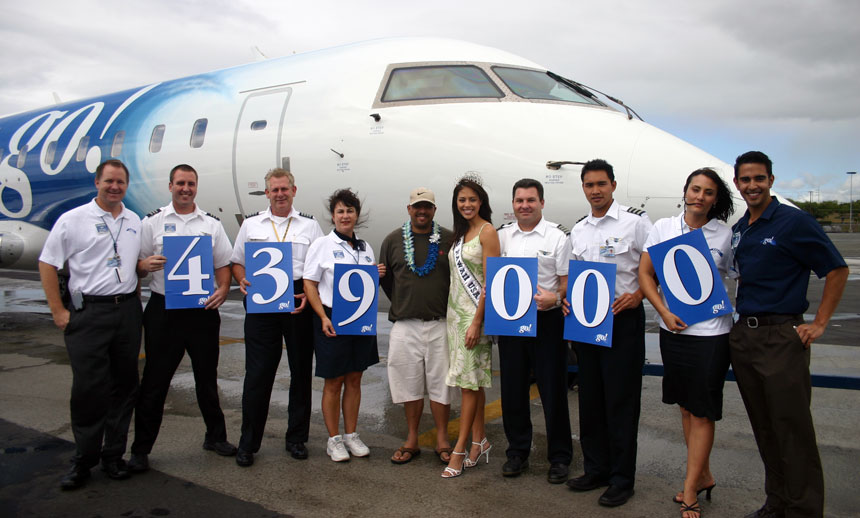
Struggling U.S. airline Mesa Air Group (MESA.O) on Tuesday said US Airways Group (LCC.N) plans to reduce the number of aircraft it pays Mesa to fly regionally.The carrier said the flight cuts, which are planned for January, July and next January, could continue, putting new strain on the company.
Mesa said that US Airways said it would eliminate three CRJ-200 flights by next year."We anticipate US Airways will continue to further reduce the number of covered aircraft in accordance with the agreement," the company said in a regulatory filing.Mesa said that as of September 30, it operated 38 CRJ-900, 11 CRJ-200, and 6 Dash-8 aircraft for US Airways under a code-share agreement.
Mesa, which provides regional service for US Airways, Delta Air Lines (DAL.N) and other carriers has been looking to shore up its finances for months as it tries to ride out volatile fuel prices and a drop in travel demand.
Mesa said on Monday it received a letter from Nasdaq warning the company its stock is subject to delisting because Mesa was not in compliance with some listing requirements.Mesa shares were down 10 percent at 26 cents in afternoon trade on the Nasdaq.
Alitalia airline seeks bankruptcy protection

Alitalia said Friday it has sought bankruptcy protection, taking the first step in a plan to reshape Italy’s debt-laden national carrier.
The company said in a statement that its board had asked the government to appoint an administrator and had declared insolvency to a Rome court.
Alitalia has been losing $3 million a day — hurt by labor unrest, competition from budget airlines and high fuel prices. Its shares have been suspended from trading since June.
The airline said its net debt at the end of July amounted to $1.73 billion. The figure does not include a $442 million loan that the government made in April to keep the cash-strapped carrier flying.
The government has been secretive about efforts to save the carrier, but the plan reportedly calls for the breakup of Alitalia into two parts. The profitable assets would be taken over by Italian investors ready to inject $1.5 billion into the airline. The other assets would be spun off into a separate company for liquidation
Qatar Airways eyes more service in US, South America and Australia

A Qatar Airways executive said Tuesday the carrier will look to expand further in the Americas and Australia as part of a long-term growth plan.
The Middle Eastern carrier began U.S. service with flights to Washington last year from its base in Qatar's capital city of Doha. The carrier also added flights to New York. But a plan to expand to Houston stalled after deliveries of long-range Boeing-777 aircraft were delayed because of a machinists strike at Boeing. The airline now expects to launch that route in March.
Executive Vice President Ali M. Al Rais told a press luncheon Tuesday he sees future growth in the North American market, but did not specify which cities the carrier is eyeing next. He also said the carrier is looking to add service to South America and Australia -- two continents where it does not currently fly.
Qatar currently has 64 aircraft, only 4 of which are Boeing 777s. The rest are made by Airbus. It has 168 Boeing aircraft on order, and 13 Airbus. The jets on order are worth about $40 billion.
The carrier said it hopes to grow its fleet eventually to 120 to 150 jets, with an average fleet age of about 3 to 3.5 years.
Al Rais said the company will "visualize and adjust" its growth plan according to global economic conditions.
But he shrugged off suggestions that the carrier might be affected by the slowing global economy.
"There is a bit of uncertainty in the global economy," Al Rais said. But there had been an "overheating taking place over the last few years. We knew it had to burst, it had to stop."
Tuesday, January 13, 2009
Investing Activities for Kids

Are you convinced that your kids should start investing? Or that you should be investing for them?
Or maybe you're considering quietly parking some money in a few stocks or a mutual fund and then forgetting about it. Think again. You can use this opportunity to help your kids learn about investing and the stock market.
Can you really get your kids interested in this stuff? You bet. Most kids are interested in money and in how they can position themselves to get more of it. That serves as a good initial motivation, and once they get their feet wet, they're quite likely to discover that they enjoy it. But before plunking your kids' allowance into stocks, it's a very good idea to play and experiment with investing. Here are some activities you and your kids can do together.
Build a mock portfolio. Have your kids make a list of the companies that interest them most. They can get ideas by looking in their closets, in their classrooms, in the mall, on TV, etc. Look at companies your kids know, such as Disney (NYSE: DIS), McDonald's (NYSE: MCD), Coca-Cola (NYSE: KO), and Abercrombie & Fitch (NYSE: ANF), for example. Write down the names of 10 to 20 interesting companies, then record the current stock price of each. Every day, week, or month you can check the prices together, see how the stocks are doing, and record the latest prices. Foolish investors focus on long-term performance, so day-to-day or month-to-month stock price movements aren't terribly important to us, but it can still be very interesting to see how stock prices move.
Follow your stocks together. Along with updating the prices periodically, you can scan newspapers, magazines, Fool.com, and other websites for stories about your companies. Is McDonald's promoting $0.75 burgers? Will this help the company by bringing in more sales, or will it hurt by decreasing the total profit? And how did the stock market react when it heard of this announcement? Did the stock go up or down?
Do some math as you follow your stocks. Pretend that you bought 10 shares of a company's stock. How much did it cost you? (You can include broker commission costs, if you want to be more precise.) What are the shares worth now, a few months later? How much money have you made? What return percentage is that? (Hint: Here's one way to figure the percentage. If the stock went from $50 to $60 per share, take 60 and divide by 50. You'll get 1.20. Subtract 1 (always 1) and you get 0.20. Multiply by 100 and you get 20. The answer is 20%.) Following stocks is great way to develop basic math skills.
Consider school subjects other than math as you explore stocks. Investing can relate to most subjects in school and can give kids a bit of a new perspective on their studies. There's obviously math involved, since they multiply share prices by how many shares they want to buy and perform other calculations with numbers from annual reports. There's history, too, as they examine how venerable companies like AT&T (NYSE: T) or Ford (NYSE: F) got to where they are now. Science? Sure -- knowing or learning a little science is important when you try to understand what some of today's technology and health care companies are doing. English? Well, there's a bit of reading involved in researching stocks, and it's always a good idea to write out exactly why you are buying a particular stock and why the company seems so promising.
Start actually investing. Once you've become comfortable with the idea of investing in stocks, it's time to consider buying some shares. Likewise, your child(ren) might also want to begin. How can a young person actually do so? There are a number of ways. Of course, you can open a joint brokerage account, with you acting as custodian, but you don't have to go this far. You can informally "sell" some of your own shares to your child.
For example, if you're about to buy 100 shares of ExxonMobil (NYSE: XOM) and your child wants to buy a share or two herself, you can just place the order together -- and order 101 or 102 shares through your broker. You don't have to buy round numbers of shares -- "odd lots" are okay. If you do these things, you'll want to keep a good record of which shares belong to whom. Once your child turns 18, she can open her own account at a brokerage and you can transfer her shares to it.
There's a lot more to investing, of course, and a lot more that you can do with kids to explore the stock market together. The learning process should prove rewarding -- and fun -- to both parent and child alike.
Oil falls below $37

Oil prices fell below $37 a barrel Tuesday in Asia on expectations crude demand will weaken amid a severe global economic slowdown.
Light, sweet crude for February delivery was down 92 cents at $36.67 a barrel by afternoon in Singapore in electronic trading on the New York Mercantile Exchange
Crude prices have fallen more than 25 percent since reaching just above $50 a barrel last week as traders returned from the holiday break to find evidence of falling manufacturing and consumer spending across the globe.
The February contract fell 8 percent on Monday, or $3.24, to settle at $37.59 after Alcoa Inc., the world's third-largest aluminum company, reported a quarterly loss of $1.19 billion.
Alcoa, the first component of the Dow Jones industrial average to post results, said last week it plans to lay off about 13 percent of its global work force by the end of 2009 amid sinking prices and demand for the metal.
The Dow fell 1.5 percent Monday and has dropped 3.5 percent this year.
"The negative sentiment we're seeing reflects the broad international macroeconomic outlook, which is considerably weaker, and what that means for energy consumption," said David Moore, commodity strategist at Commonwealth Bank of Australia in Sydney.
Prices have fallen despite continued fighting between Israel and Hamas in Gaza. Israeli troops advanced into Gaza suburbs for the first time Tuesday, after Prime Minister Ehud Olmert warned Islamic militants of an "iron fist" unless they agree to Israel's terms to end the fighting. About 900 Palestinians and 13 Israelis have died since the conflict started on Dec. 27.
After initially spurring a jump in oil prices, the Gaza conflict has been largely ignored by traders because it hasn't affected major supplies and no oil-rich Middle East neighbors have become directly involved.
"The impact on oil supply is obviously limited," Moore said.
Prices of futures contracts for later this year are higher than the February contract on investor expectations that announced production cuts of 4.2 million barrels a day since September by the Organization of Petroleum Exporting Countries will begin to reduce global supply.
The June contract trades at $50.40 a barrel.
"There's some wariness that the OPEC actions may cause markets to tighten up," said Moore, who expects oil to average $55 a barrel this year.
Investors are also looking for signs that demand from emerging markets, which helped drive oil's rise to $147.27 a barrel in July, will rebound.
"Growth concerns will dominate for the next few months," said Robert Prior-Wandesforde, co-head of Asian economic research at HSBC in Singapore. "Commodity prices will start to improve as sentiment about China and India starts to turn later this year."
In other Nymex trading, gasoline futures fell 0.41 cent to $1.08 a gallon. Heating oil dropped 0.24 cent to $1.47 a gallon while natural gas for February delivery slid 1.4 cents to $5.53 per 1,000 cubic feet.
Monday, January 12, 2009
Oil falls

Economic worries outweighed factors that would normally boost the market -- Mideast tensions, signs that OPEC was implementing large-scale production cuts, the ongoing Gazprom-Ukraine gas dispute and a winter likely to feature the coldest weather in a decade.
"It's amazing what the market's ignoring," said Phil Flynn, an analyst at Alaron Trading Corp. "That really tells you the story of how bearish this is."
Light, sweet crude for February delivery fell 7 percent, or $2.91, to 37.92 a barrel on the New York Mercantile Exchange. The contract on Friday fell 87 cents to settle at $40.83.
"Clearly, the focus this morning is back on the macroeconomics, and the concern that the demand for oil is just not going to be there any time soon, and there's going to be plenty of oil out there," Flynn said.
Steel producer Alcoa, chip maker Intel and biotech company Genentech are expected to report fourth quarter results this week, giving investors a glimpse of how deep the current recession may be.
"Given that we're likely to see quite a few rather poor fourth quarter earnings reports, downward pressure will continue to be exerted on oil," said Victor Shum, an energy analyst with consultancy Purvin & Gertz in Singapore. "Worries about the macroeconomic outlook will continue to constrain oil."
Although still far away from their Dec. 19 closing of $33.87, oil prices fell 17 percent last week, weighed by fears that rising U.S. unemployment will undermine crude demand.
The Labor Department said Friday that employers slashed 524,000 jobs in December and 2.6 million jobs for all of 2008. The nation's unemployment rate jumped to 7.2 percent, the highest since 1993.
Still, those bearish factors were expected to keep further price erosion in check.
"We have these other factors that will support oil," Shum said. "Most likely, we won't see a big downward spiral despite the poor earnings reports."
Raymond James analyst Darren Horowitz said in an analyst note that while the recession is dominating short-term prices, geopolitical factors such as Saudi Arabia's weekend announcement that it would cut oil output by about 300 million barrels per day below its target may lend support in the long term.
Prices of futures contracts for later this year suggest investors expect oil to recover. The March contract trades near $46 a barrel while the April contract trades above $49.
"The expectation is that pricing will regain strength, and it's not a question of if but when," Shum said.
The contract price spread is creating an enormous incentive to build inventory, said oil trader and analyst Stephen Schork.
"Little wonder then why overall crude oil supplies have since jumped to a 35-week high," Schork wrote in his daily publication, The Schork Report.
There are signs that the Russia-Ukraine gas dispute could be nearing an end.
Gazprom, Russia's gas company, said that Ukraine signed a deal Monday to allow independent monitors to track natural gas supplies from Russia to Europe with no additional conditions. The agreement could open the way for a resumption of gas shipments to Europe through pipelines that cross Ukraine.
Sunday, January 11, 2009
GM


General Motors Corp. turned its opening news conference at the Detroit auto show into a pep rally touting the health of the company and its products, unveiling plans Sunday to build a 40-mile-per-gallon minicar for the U.S. market and a Cadillac concept car powered by electricity like the Chevrolet Volt
The Chevrolet Spark subcompact was called the Beat when GM unveiled the front-wheel-drive three-door hatchback as a concept car in 2007, powered by a 1.2-liter turbocharged gasoline engine. It's about the size of a Honda Fit or Toyota Yaris and is set to go on sale in Europe next year and in the U.S. in 2011.
GM also announced that the Chevrolet Orlando seven-passenger crossover vehicle will go on sale in North America in 2011.
The company ended its showcase of 17 new and upcoming vehicles at the North American International Auto Show with a surprise: the Cadillac Converj concept car, which is designed to go 40 miles on electric power alone after being recharged from a standard wall outlet. A small gasoline engine would extend the range to hundreds of miles.
It's the same powertrain technology GM is using in the Chevrolet Volt, a much-anticipated extended range vehicle that is set to go on sale next year.
Several hundred GM employees, dealers and retirees gathered inside the convention center for the unveilings, cheering and waving signs that said "Here to Stay" as they flanked the vehicles driving through the show floor.
GM Chief Executive Rick Wagoner told the crowd the vehicles are smaller, smarter and more fuel efficient, with "enough towing capacity" to pull GM out of its current troubles.
The government granted the struggling automaker $13.4 billion in federal loans in December so the company could stay in business, and GM wants to show off innovations to demonstrate to people that the loans were a good investment.
"We've made tremendous progress in the past several years of making cars and trucks that consumers really want to buy," Wagoner said.
GM also is showing off new versions of the Buick LaCrosse sedan, and the Chevrolet Equinox and Cadillac SRX crossover SUVs at the show. Those new 2010 models are set to go on sale later this year.

Israeli Attacks Gaza
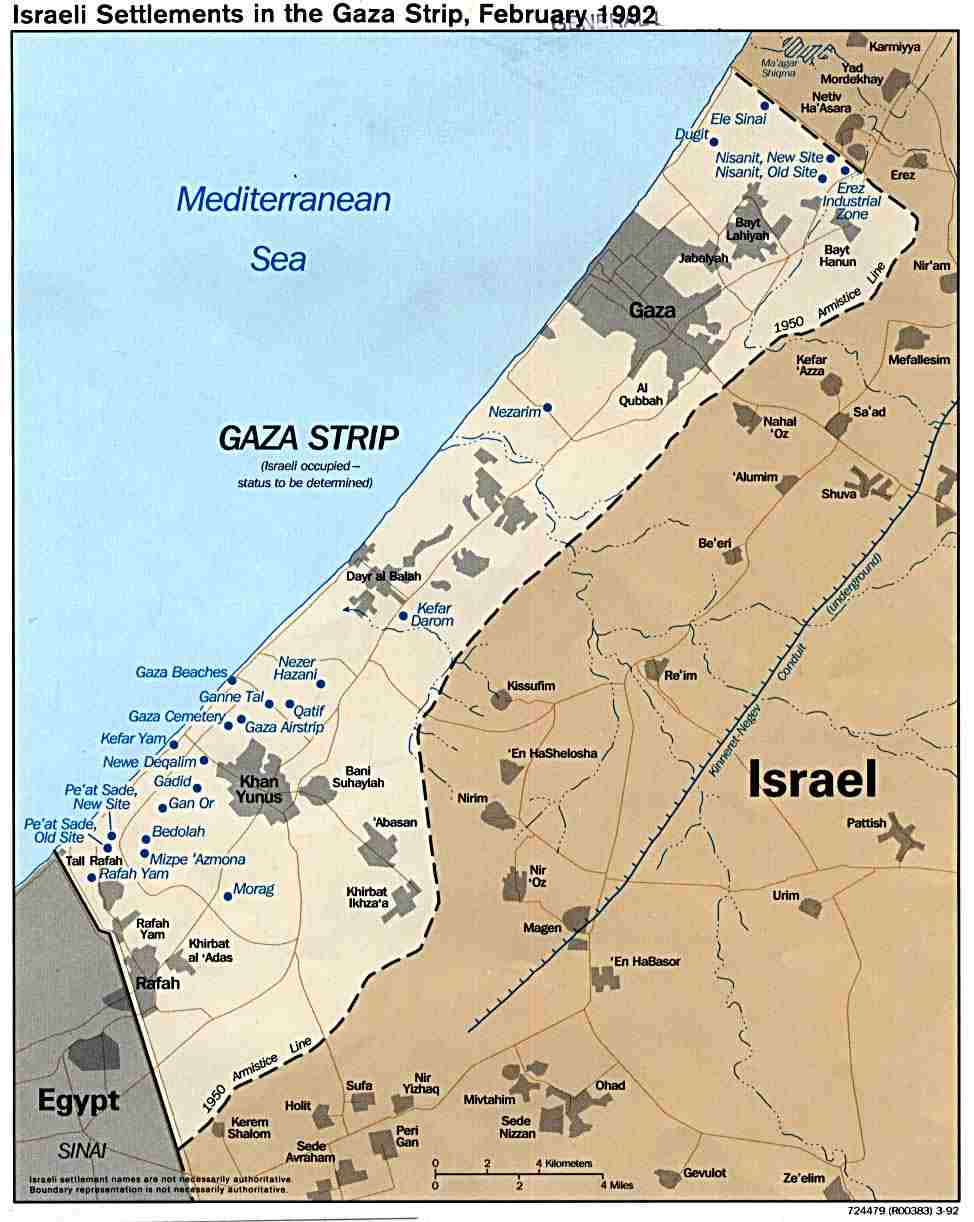
Late Saturday morning 80 Israeli fighter planes and Apache helicopters launched the first wave of several air attacks over the Gaza strip. Dozens of sorties dropped over a hundred bombs on 150 Hamas targets, destroying 40, including police stations and military installations in a matter of minutes.
Early Sunday morning a second wave of Israeli military strikes bombed a mosque and the Hamas-run Al-Aqsa TV station.
Simultaneously, the Israeli Defence Forces (IDF) amassed hundreds of infantry and armoured corps troops on the Gaza border in preparation for a possible ground invasion.
Israeli Defence Minister Ehud Barak rejected calls by the UN and the EU for a ceasefire, and told the international media that Israel would not rule out widening the offensive to include a ground operation.
"For us to be asked to have a ceasefire with Hamas is like asking you to have a ceasefire with Al-Qaeda," Barak said in an interview with Fox News.
It's something we cannot really accept. Our intention is to totally change the rules of the game," he added.
Most of those killed and wounded were Hamas military and police personnel. However, dozens of Palestinian civilians are reported to be among the dead.
The civilian casualties are expected to rise. Many of Hamas's installations are in densely populated civilian neighbourhoods. School children in several surrounding schools were on their way home as the first wave of bombs hit Gaza city.
Grim scenes of carnage fill the corridors of Gaza's hospitals and morgues as the dead and dying, and mutilated bodies lie on the ground due to a shortage of hospital beds and morgue space.
Medical staff are treating the wounded under severe pressure, as Gaza has limited supplies of electricity, medicine, medical equipment, and fuel to operate emergency generators due to the Israeli-imposed blockade of the coastal territory. Only very limited amounts of humanitarian aid is allowed in.
Egypt, in a rare display of solidarity with the beleaguered Gazans, has opened its Rafah border crossing to allow the wounded to be evacuated to Sinai hospitals to receive medical treatment.
"It is madness and people are in a state of shock," Elena Eqleibo, a former Costa Rican diplomat and hardened aid worker who has lived in Gaza city for several years told IPS.
"I had just finished a meeting in the municipality when suddenly there were massive booms and plumes of smoke surrounding the entire area," said Eqleibo, whose apartment is located near a major Hamas headquarters.
"I visited some neighbours at the local supermarket and grocery store, and everybody is in a state of shock. Nobody can believe the scale of the attack.
" Abdallah Al-Agha, who lives near the former presidential palace of the late president Yasser Arafat, which was then taken over by Hamas and subsequently targeted by the Israelis, said there were scenes of chaos outside his apartment when the first bombs hit.
"The thunderous explosions went on for what seemed ages. People were panicking, ambulances and fire trucks were tearing down the streets and trying to help the wounded and put out fires which had broken out amongst the crumbled buildings. "Children were screaming and crying and mothers were hysterically looking for their kids coming home from school," Agha told IPS.
Israel had been threatening a large-scale military incursion following an increasing number of rockets fired by Palestinian resistance groups at Israeli towns bordering Gaza.
The rocket attacks followed the end of a fragile six-month ceasefire between Israel and Hamas and ten days of intensive fighting last month following an Israeli cross-border military incursion into Gaza.
The Islamic resistance organisation accused Israel of breaching the terms of the truce by refusing to lift the hermetic sealing of Gaza's borders.
But the timing of Israel's attacks caught Hamas by surprise. Israel had temporarily opened the borders for a few hours on Friday to allow in several convoys of humanitarian aid.
This was done as the Israeli government simultaneously launched a massive diplomatic campaign to explain its case for a military operation to the international community.
Israeli intelligence timed the operation to coincide with a meeting of Hamas's leadership, several of whom were killed, as well as a graduation ceremony of hundreds of new Hamas police cadets.
But the Israelis are aware that the attacks will not cow Hamas, and that retaliatory rocket fire can now plague Israeli border towns on an even larger scale.
Following the initial Israeli sorties, Hamas and smaller resistance groups rained rockets down on Sderot, Ashkelon and other border towns, killing an Israeli and wounding others.
Israel has declared a state of emergency. Israelis within a 10-kilometre radius of Gaza were ordered to enter bomb shelters within 15 seconds of a siren warning.
Residents within a 20-30 kilometre radius were ordered to enter shelters within 45 seconds of siren warnings.
Meanwhile, the IDF is expecting an increased daily rocket barrage of up to 100 missiles, some of which are expected to reach cities and towns located further away as Hamas uses upgraded projectiles with a 40-kilometre range as opposed to the current range of only 20 kilometres.
Analysts on both sides of the Israeli-Palestinian divide are arguing that the current military invasion is not about deterrence but more about the upcoming Israeli elections in February where Barak is a candidate for the prime minister's seat.
Yahoo!

Yahoo! is getting closer to picking a new chief executive to replace Jerry Yang and investors are abuzz about who might be on top. While two names are riding the rumor circuit, Yahoo! might need something that neither of the named candidates has: youth.
On Friday speculation began circulating about possible CEO picks after a report said the Internet company narrowed its search to Carol Bartz, the current chairwoman of Autodesk (nasdaq: ADSK ), Susan Decker, Yahoo! (nasdaq: YHOO )’s president, and one other candidate.
Yahoo! is expected to make a decision before its earnings report on Jan. 27. Yahoo’s shares rose 0.5% to $13.13, at the close on Friday.
Global Equities Research analyst Trip Chowdhry said that the ideal candidate is neither Bratz nor Decker, but a 25 to 30 year-old Steve-Jobs-like-wunderkind who is brash and product savvy. The problem with Yahoo! he said is products, technology, and motivation, and the new leader will have to be able to deal with all three. “If Bartz becomes CEO, investors should run the other way,” said Chowdhry.
“Autodesk is a prehistoric company when it comes to technology. We want someone who can cut through the generation gap and who can take the company to the next level.”
Chowdhry doesn’t see an outside candidate taking the reins of Yahoo! and said that any internal promotion would probably come from the engineering ranks. “If someone is super bright Yahoo! is not going to be their first choice, it’s not going to be their second choice and it’s not going to be their third choice,” said Chowdhry. “I haven’t seen any person externally who can change the fortunes of Yahoo!”
Chowdhry isn’t happy with Decker as a pick either. “She oversaw three failed CEO’s and under her leadership the stock has gone down more than 80.0%,” he said.
Saturday, January 10, 2009
Fool Awards

Talk about a tough Fool Awards category. Coming up with candidates for the biggest opportunity of 2008 isn't easy when it felt like the only opportunity investors had was to lose money.
But throughout the year, we've looked for silver linings in the bear market. And while the vast majority of stocks fell in 2008, there were a few bright spots. So, without further ado, here are five nominees for your voting pleasure.
But throughout the year, we've looked for silver linings in the bear market. And while the vast majority of stocks fell in 2008, there were a few bright spots. So, without further ado, here are five nominees for your voting pleasure.
Discount retailers For companies that offer low-cost alternatives on necessities like food and clothing, a struggling economy is actually a good thing. Discounters like McDonald's (NYSE: MCD), Wal-Mart (NYSE: WMT), and Family Dollar (NYSE: FDO) all posted gains in a losing market thanks to a growing base of budget-conscious customers. Investors who foresaw the recession got a nice reward.
Short selling After years of taking it in the shorts, short-sellers finally got their revenge in 2008. Popular bear-market ETFs delivered amazing returns as stock markets tanked. And for those who bet against stocks like Sirius XM (Nasdaq: SIRI) and General Motors (NYSE: GM), the profits were especially sweet.
Cash With interest rates at historic lows during much of the decade, cash got a reputation for being a waste of investment capital. Not so during 2008, though, as the credit crunch made having money on hand attractive again. While liquidity-starved companies suffered to raise capital, cash-rich giants like Berkshire Hathaway (NYSE: BRK-A) (NYSE: BRK-B) swooped in to pick up assets on the cheap.
Tax-loss selling No one ever said losing money was fun. But at least it'll give you a break on your tax return come April. Yes, in portfolios full of red ink, the best many investors could do to salvage something amid the carnage was to sell and grab valuable capital losses to offset past gains and other income.
Stocks Wait a minute -- stocks did terribly in 2008! Yes, but for those still looking to buy stocks both now and in the future, lower share prices meant more bargains for value-conscious investors. Although you may not see quick gains on shares you bought last year, cheap stocks may prove to be the most valuable long-term opportunity you could find in 2008.
Friday, January 9, 2009

Sunday, October 5, 2008
Delta Air

Delta Air Lines Inc. said Friday that systemwide traffic and capacity decreased in September compared with the same month a year ago.
The Atlanta-based carrier said it flew 9.71 billion revenue passenger miles last month, a 0.8 percent decline from 9.79 billion a year earlier.
A revenue passenger mile is a widely watched industry measurement accounting for one paying passenger flown one mile.
Available seat miles, or capacity, fell 3.7 percent to 12.14 billion from 12.61 billion a year earlier.
Load factor, or occupancy, rose 2.4 percentage points to 80 percent from 77.6 percent.
For the first nine months of the year, Delta recorded systemwide traffic of 94.46 billion revenue passenger miles, compared to 92.83 billion a year earlier. Available seat miles rose to 115.2 billion from 114.35 billion. Year-to-date load factor was 82 percent, compared with 81.2 percent a year earlier.
Shares of Delta Air Lines slipped 36 cents, or 4.6 percent, to $7.55 in afternoon trading
Thursday, August 28, 2008
where the market is heading
For the next couple of months we can expect the market, as we have seen oil prices that we expected to reach $120 has passed $145 back to the $114-120 range , and for gold its soaring as the U.S dollar is gaining strength , but for Oil , Gold and most of the sectors are heading up.
For the past couple of years everybody has been talking about recession and the falling economy , that's only spreading rumors for weak investors like those who immediately sell as they hear about oil & gas future expectations , That's not true the market is in a well condition, i can tell its a bull market for the rest of this year.
i haven't blogged since Google (goog) announced its second quarter earnings report based on its Internet advertisement sales which is a big lie to little individuals who open their AdSense accounts as to earn with Google, but the truth is that they work for Google for free and they get a foot in the ass just as they are about to get paid.
That was my first post and its my return to the market we share but this time no AdSense , a quick pick for you my fellow investor you can comfortably go short MCD at about $63 to $65 and pt a summer watermelon in your stomach.
Friday, April 11, 2008
Airlines Best Fares

Just about every air-travel trend is getting worse, driven largely by soaring jet-fuel prices. To save money, strapped carriers are adding every surcharge they can get away with, raising fares, eliminating perks, and cutting back flights.
That means air travel is going to get more stressful than ever. Most flights will be full, with crammed overhead bins and no chance for a better seat. Delays have hit record levels recently and will probably get worse. And there will be less margin for error, so a problem with one flight could quickly cascade to others.
Frequent fliers who spend a lot on air tickets, of course, get the best seats and other preferential treatment--and often know the best tricks for traveling smoothly. The rest of the flying public has less recourse. But there are a few things you can do to reduce the odds of a middle seat, a lost bag, a surprise surcharge, or a nightmare trip:
Book directly with the airline. Use websites like Orbitz, Travelocity, and Expedia to research flights, but once you've found the one you want, book through the airline's website or a live agent. That's often where you'll find the best fare and have the best chance of getting an aisle or window seat. And if something goes wrong, the airline is more likely to help if you originally made the reservation through it.
Use every automated service available. Airlines have replaced many of their live agents with online services and machines at the airport--one trend that actually benefits travelers. Fliers with no bags to check can avoid lines by printing their boarding pass either at the airline's website up to 24 hours in advance or at an airport kiosk. This is also a chance to check whether a better seat is available. The sooner you check in, the better--all your fellow travelers are doing the same thing, and if any choice seats are still left, they'll go to whoever claims them first.
Pack light--really light. Most airlines allow one checked bag at no extra charge but now tack on $25 for a second checked bag. That's meant to bring in a bit of extra revenue--but also to encourage passengers to pack less, to help cut down on the weight in the plane and reduce fuel use. Some fliers try to skirt the surcharge by packing two bags' worth of stuff into one huge suitcase. Bad idea--many airlines also charge $100 for an overweight bag.
Then there are fliers who stuff a week's worth of gear into an oversize carry-on. That can backfire, too. On full flights, the overhead bins are often full before half the passengers have even boarded, and that bulging duffel won't fit under a seat, either. That means it will end up getting checked, costing you--and those around you--lots of added inconvenience.
Better to underpack and pick up spare socks or underwear at your destination if you really need them. If you're transporting gifts or anything that can be shipped by mail or UPS, do that ahead of time. It'll cost less than that $100 surcharge.
Fly off-off-peak. A red-eye or crack-of-dawn departure might cost you some sleep--but buy you some comfort. The only flights these days with any chance of a light load are those at the start or end of the day, when airlines are often moving planes into position for a long shift of full-capacity hauling.
Consider paying for a more comfortable seat. Some airlines now charge an extra $15 or $20 for exit-row seats or other spots in coach that tend to have a bit more legroom or are closer to the front of the plane. Get over the outrage, and pay up. "It's not such a terrible amount to pay to be comfortable," says David Stempler, president of the Air Travelers Association. Paying the extra fee might also entitle you to board before the rest of the horde, ensuring an overhead spot for your bag and less jostling.
Look into the government's Registered Traveler program. Fliers who enroll in this new program agree to supply personal info and submit to a background check, in exchange for an ID that allows them to pass through expedited security lines at the airport. Road warriors who have VIP status with their airline often get access to express security lines, anyway, and wouldn't need it. And so far, just a few airports and carriers participate, so it makes sense only for certain travelers. But this program is likely to grow quickly, and for people who travel once or twice per month, the cost--about $100 upfront, plus a $28 annual fee--might seem quite reasonable if it takes one long line out of the usual airport experience.
Be a low-maintenance traveler. Flights go more smoothly for people who do what they're supposed to. Check the Transportation Security Administration's website before your trip for the latest baggage rules. Use a regulation-size carry-on. Pack snacks. Most important, with so many things that can go wrong, arrive early, and have a backup plan. "Time is your friend," says Stempler. "Getting there late only puts you at a disadvantage." And no traveler wants to start a flight like that.
Thursday, April 10, 2008
Microsoft and News Corp Bid for Yahoo
Yahoo and AOL are reportedly on the verge of announcing a surprise merger plan, as part of a brilliant Yahoo counter-attack. And now Andrew Ross Sorkin and Miguel Helft of the NYT report that Microsoft and News Corp (NWS) are in talks to make a joint bid for Yahoo:
Rupert Murdoch’s News Corporation (NWS) is in talks with Microsoft (MSFT) about joining in its contested bid for Yahoo, according to people involved in the discussions. The pairing, which would combine Yahoo (YHOO), Microsoft’s MSN and News Corporation’s MySpace, would create a behemoth that would upend the Internet landscape.
If News Corporation throws its weight behind Microsoft’s offer, it could allow Microsoft to raise its bid, putting even more pressure on Yahoo and its shareholders. At the same time, the alignment of Microsoft and News Corporation would remove a possible alternative for Yahoo, leaving it with fewer opportunities to escape Microsoft’s grasp.
The talks between Microsoft and News Corporation are at a sensitive stage, people involved in the discussions said. “There’s a long way to go before anything is definite,” one person involved in the talks said.
Would this combination make sense? Sure it would make sense. Owning MySpace standalone isn't doing Rupert any good--he's getting his clock cleaned by Facebook. MSN's dead in the water. But throw all that together with Yahoo and you could build a pretty honkinging global communications, social networking, and advertising platform.
Rupert's got some cash, too, which means that the two might be able to pay more without infuriating their own shareholders bases.
In any event, at this point, you gotta believe Yahoo's stock is going up.
Don't Miss
AOL and Yahoo May Announce Merger Next Week
Wednesday, April 9, 2008
American Airlines Cancels Flights
Business trips and vacations were disrupted for tens of thousands of travelers Wednesday as American Airlines canceled more than 1,000 flights -- nearly half its schedule -- to fix faulty wiring that could cause a short-circuit or even a fire and explosion.
Executives at American said safety was never compromised, and they suggested the nation's biggest airline was the victim of suddenly stepped-up scrutiny by federal regulators.
American estimated that more than 100,000 travelers were booked on the canceled flights. Many had to scramble to book new flights and were stranded at hotels far from home.
The airline had already scrubbed 460 flights on Tuesday after federal inspectors found problems with wiring work done two weeks ago, during the first set of shutdowns.
A top executive said the cancellations would be a "significant" cost to American, and shares of parent AMR Corp. fell 11.1 percent, down $1.15 to $9.17.
The issue stems from an order that the Federal Aviation Administration gave airlines in September 2006 -- and gave airlines until last month to meet -- about the bundling of wires in the backup power system for the fuel pump of the MD-80 airplanes. The fear is that improperly bundled wires could rub, leading to an electrical short or even fire. However, no serious incidents have been blamed on the bundles, the FAA said.
American officials thought they had fixed the problem last month. But this week, FAA inspectors found problems with the work done on more than a dozen planes. American said it had no choice but to ground all 300 of its MD-80s to deal with the wiring bundles.
American operates about 2,200 daily flights, more than one-third with MD-80s. Nearly half the cancellations were concentrated at two airports, in Dallas and Chicago.
At New York's LaGuardia Airport on Wednesday, hundreds of passengers stood in check-in lines or milled about, using cell phones to get updates on their flights. The airline offered free doughnuts, coffee and orange juice, but there were few takers.
"They should be able to predict these kinds of things," said Laura Goodman, whose flight home to Dallas was canceled. She said would miss an important meeting because the airline couldn't rebook her until Thursday.
New Yorker Michelle Soss had hoped to steal a few days in Albuquerque, N.M.
"I covered my kids' schedules, I covered my work schedule to get away for a few days," she said. "I don't know if I'm getting anywhere."
American's cancellations came after similar delays at Southwest, Delta and United. Last week, hundreds of travelers were marooned when Aloha Airlines and ATA Airlines shut down and filed for bankruptcy protection.
Alaska Airlines said Wednesday it canceled 14 flights to inspect the wiring on its nine MD-80s.
For travelers, the bad news might not be over. Daniel Garton, American's executive vice president, said flights would be canceled Thursday -- he said it was too early to say how many -- and possibly on Friday, too.
A return to normal operations depends on how quickly mechanics can inspect and fix the wire bundles. As of Wednesday morning, only 30 MD-80s had been cleared to fly by the FAA.
Garton acknowledged that the bundling of wires had not met FAA standards, but he said "these were not huge errors" and posed no threat to safety. He said the agency used to give airlines "latitude" in interpreting safety regulations, but no longer.
The FAA began looking more closely at airlines' compliance with safety directives in recent weeks, after it was criticized for letting Southwest operate planes that had missed inspections for cracked fuselages.
In the past few weeks, the FAA levied a $10.2 million penalty against Southwest and conducted new inspections at all U.S. airlines, leading to flight cancellations at Southwest, Delta and United.
FAA spokeswoman Diane Spitaliere said inspectors found problems with the wiring bundles at 15 of 19 American MD-80s that it checked this week.
The 2006 safety order from the FAA directs airlines in how to pack and stow wiring to a hydraulic pump in the wheel well to prevent the wires from rubbing together.
According to the FAA, shorted wires could ignite fuel vapors and cause a fuel-tank explosion that could destroy a plane.
The explosion of TWA Flight 800 off New York's Long Island that killed all 230 people aboard in July 1996 was blamed on fuel vapors ignited by wiring. But it was a Boeing 747, not an MD-80, and investigators believe the disaster involved different wiring from the bundles now under scrutiny.
Brian Stirm, an aircraft-maintenance expert at Purdue University, said airlines had plenty of time for the inspections and that even an untrained mechanic could spot a problem.
The cancellations could hardly come at a worse time for American. Its parent, AMR Corp., is scheduled to report first-quarter earnings in two weeks, and analysts are forecasting a loss of more than $300 million. High fuel prices and the downturn in the economy are hurting the industry.
American officials said the company would give $500 travel vouchers to anyone stranded overnight. It also paid for hotel rooms and meals for an undisclosed number of passengers.
Bob McAdoo, an airline analyst, said passengers might soon forget the debacle, especially since several other major airlines have canceled flights recently. But he said passengers who missed big events like weddings might avoid American again.
Kathy Neer of Santa Fe, N.M., was caught up in both waves of cancellations to and from a vacation in Paris. She and her husband were stranded in Dallas on Tuesday on the final leg of their journey home. American gave the Neers a voucher for a hotel room and seats on another flight home Wednesday.
"They say our flight is leaving at 3:55 p.m., but do you think we trust them?" Neer said. "After being burned twice, we're a little skeptical."
Subscribe to:
Posts (Atom)


